
Wholesale inflation fell to a 4-month low of 1.31 per cent in August due to a decline in prices of vegetables and fuel, even though onion and potato prices spiked, according to official data released on Tuesday. Wholesale price index-based inflation fell for the second straight month in August after it hit a high of 3.43 per cent in May. Inflation in July was 2.04 per cent. In August last year, WPI inflation was (-) 0.46 per cent.

The Reserve Bank of India (RBI) on Friday kept key repo rate unchanged at 4 per cent in view of rising inflation and faint signs of economic growth amid gradual lifting of coronavirus (COVID-19) lockdown. The central bank's newly-constituted monetary policy committee (MPC) began its three-day meeting on October 7 and maintained the stance as accommodative. It also kept the reverse repo rate unchanged at 3.35 per cent.

The central bank held the cash reserve ratio at 4 per cent.

Retail inflation crossed the RBI's comfort level and rose to 5.21 per cent in December on increase in prices of food items.
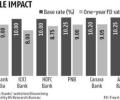
Lending rates in certain segments may be increased; fixed depositors may lock into existing rates.

It is to be seen if SBI under Setty, who will have a three-year term, can ride the economic cycle to take SBI to new heights, navigating some of these challenges.

Sanjay Malhotra takes charge as the 26th RBI governor at a time when headline retail inflation has shot up to 6.2%.

Union Finance Minister Nirmala Sitharaman on Monday said people are finding current interest rates "very stressful" and urged banks to make them affordable. Speaking at an event organised by State Bank of India, the finance minister said that at present, India requires industry to ramp up and invest in new facilities, and added that lowering lending rates can help achieve the "Viksit Bharat" aspiration.

If the interest rate on bank deposits is linked to any external benchmark, it would jeopardise the banks' fund-raising ability. Interest rates on small savings schemes are likely to be reduced very shortly, to maintain parity. All these steps would indeed affect retired people, and particularly those dependent on interest income, says Arindam Gupta.

The Reserve Bank will go for a "dovish pause" at Wednesday's policy review announcement amid developments such as a rise in inflation, government maintaining the inflation target band and a likely impact on growth due to local lockdowns on rising COVID-19 infections, analysts said on Monday. Economists at American brokerage Bofa Securities said price stability, growth and financial stability will become the prime focus areas for the central bank going forward. "The RBI MPC (Monetary Policy Committee) should deliver another dovish pause on Wednesday," it said. The policy announcement, the first for the fiscal, will come days after the government maintained the RBI's target to ensure inflation to be within 2-6 per cent band for five more years.

Returns of liquid funds are meant only for the short term and don't help investors create wealth over the long term, as equity funds do.

If you don't have a specific goal, but want intermittent liquidity, then ladder your FDs, that is, invest in FDs of varying maturities, such as one, two, three, five or even 10 years. Laddering ensures FDs mature at regular intervals.
.jpg)
Bankers remained ambivalent on the impact of Tuesday's policy announcement by Reserve Bank on the cost of funds and refrained from giving a guidance on the direction in which lending rates are headed.
The RBI on Tuesday maintained status quo on interest rates, saying there have been no developments to warrant further easing since an unscheduled rate cut about a fortnight ago.
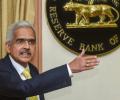
Financial markets are under stress and require steps by the central bank for market stability and revival of economic growth, he said while announcing the decisions taken by the Monetary Policy Committee in Mumbai.

The Reserve Bank of India (RBI) on Monday realigned the bank rate to marginal standing facility (MSF) rate in one-time technical adjustment. The bank rate now stands at 9.5 per cent as against six per cent earlier.

After two years of a record low interest-rate regime, Indian corporate houses are experiencing a sharp and abrupt increase in funding costs. With the Reserve Bank of India last month making an unequivocal turn towards policy tightening amid high inflation, firms looking to tap the capital markets for funds are ending up shelling out more. The yield on the benchmark triple-A-rated corporate bonds maturing in three years has climbed 98 basis points (bps) since the policy rate hike in May. It was last at 7.47 per cent, Bloomberg data showed.

Some see CRR cut as tight liquidity continues.
RBI may wait for a substantial downtrend and maintain repo at the current level in its third-quarter review.
It maintained, however, that RBI's lending (repo) and borrowing (reverse repo) rates to banks will rise by 75 basis points (0.75 per cent) in 2010, in view of rising prices coupled with the surge in industrial production.

RBI has cut the rates thrice so far in 2015 by 25 bps each.

They feel reducing policy rates will help to boost production and revive the economy.

January inflation may undershoot RBI's 6% target.
Real estate companies expressed disappointment over the RBI's decision to hike the short-term lending rate, saying this could hurt economic growth and adversely impact property demand in the ongoing festival season.

Consensus among members at April policy meet that rupee be allowed to depreciate
The Reserve Bank of India on Tuesday left all the key interest rates unchanged in the first quarterly review of the monetary policy.
Wholesale inflation fell to a 3-month low of 2.04 per cent in July on decline in prices of food items especially vegetables, government data released on Wednesday showed. The decline in wholesale price index (WPI) based inflation in July came after it rose for four months in a row till June, when it was 3.36 per cent. It was (-) 1.23 per cent in July last year. In April wholesale inflation stood at 1.19 per cent.
With RBI rate cut, loans are likely to be cheaper.

Das said banks have passed only 0.29 per cent in rate cuts to their borrowers as against 0.75 per cent cuts in interest rates by the Reserve Bank till June.

The Income-Tax (I-T) Department has detected widespread tax evasion involving cryptocurrencies and, according to media reports, has issued emails to thousands of defaulting taxpayers seeking transaction details. Investors must understand the tax rules governing crypto assets and respond promptly to these emails.

Ignoring the rate cut demand of India Inc, RBI in its first quarter monetary policy review kept the short-term lending (repo) rate, at which banks borrow from RBI, unchanged at 8 per cent.
The banking industry is hoping for more rate cuts by the Reserve Bank, which in turn, will help soften both deposit and lending rates, a top financial industry expert said.

IT and interest rate-sensitive bank, realty, and auto stocks ended with sharp gains.
The Reserve Bank may announce cut in policy rates up to 50 basis points soon as inflation has been on way downward for past three successive weeks, bankers said.
Banks are expecting a 25-basis-point increase in the repo rate (7.75 per cent at present) -- the central bank's short-term lending rate against government securities -- when the Reserve Bank of India announces its monetary policy on April 24.
A repo rate hike may hurt growth far more than it will help deal with an inflation rate that is already dropping.

It believes that RBI will continue with liquidity infusion through CRR cuts and open market operations. Rate cut may happen only in January
RBI sees marginal improvement in economic growth to 5-6%.
